A Professional's Take on the New Samsung Galaxy Z Trifold
The Samsung Galaxy Z Trifold arrives as one of the most ambitious mobile devices Samsung has ever brought to market. In a category that has already seen book-style foldables and compact flip phones mature over several generations, the trifold concept pushes the idea further: a device that behaves like a conventional phone when closed, but expands into a much larger tablet-style workspace when opened fully. For buyers who have followed foldables with curiosity but hesitation, this is the kind of product that forces a serious question: is the extra screen space genuinely useful, or is it simply a premium engineering exercise?
From a professional editorial perspective, the answer is more nuanced than hype suggests. The Galaxy Z Trifold is impressive, innovative, and clearly aimed at people who value productivity, multitasking, and large-screen flexibility. At the same time, it is expensive, physically substantial, and better suited to specific types of users than to the average smartphone buyer. This article examines how the device performs in practical terms, what its design means for daily ownership, how it compares with more conventional premium phones and foldables, and what buyers should weigh before committing to such an unusual flagship.
What the Samsung Galaxy Z Trifold Is Trying to Solve
Most premium smartphones have reached a point where year-over-year improvements feel incremental. Better processors, brighter displays, smarter cameras, and AI features all matter, but they rarely transform how people use their devices. Foldables changed that by introducing adaptability: one device could be compact enough for the pocket and expansive enough for more serious work or entertainment. The Galaxy Z Trifold extends that idea by offering an even larger unfolded display, roughly in tablet territory, while still preserving a phone-like outer screen for quick everyday tasks.
That matters to a specific set of users. Business travelers want to review presentations without packing another device. Remote workers need better multitasking on the move. Power users often juggle messaging, documents, email, and video calls in parallel. Creative users may want a bigger canvas for editing photos, sketching ideas, or simply reading and annotating content with less compromise. The Trifold is aimed at these real-world scenarios, not just at buyers chasing novelty.
Design and Form Factor Analysis
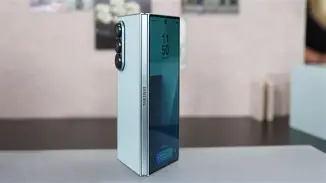
The defining characteristic of the Galaxy Z Trifold is its dual-hinge, inward-folding design. When folded, it functions like a relatively thick premium smartphone with a cover display suitable for one-handed tasks. When opened fully, it spreads into a large inner display that feels much closer to a compact tablet than to a traditional foldable phone.
From a design standpoint, Samsung appears to have prioritized screen protection and structural confidence. An inward-folding approach means the large flexible display is better protected when closed than designs that leave part of the screen exposed. For buyers worried about the long-term fragility of foldables, that is an important point. Samsung’s history with hinge refinement and water resistance also gives it more credibility than many newer foldable competitors.
Still, this is not a small device. Weight and thickness are among the biggest trade-offs. In practical terms, the Trifold is less pocket-friendly than a standard flagship slab phone and even less discreet than a conventional book-style foldable. It will fit into daily life best for users who are willing to tolerate extra bulk in exchange for having a much larger display on demand.
Professionally speaking, the industrial design is impressive because it communicates intent. This is not pretending to be a minimalist mainstream phone. It is openly a productivity-first premium device. Buyers who understand that framing are more likely to appreciate it than those expecting the effortless portability of a standard Galaxy S-series phone.
Display Experience: The Real Reason to Consider It
If the Galaxy Z Trifold has a core selling point, it is the display system. The outer display lets owners handle ordinary smartphone tasks quickly: unlocking, replying to messages, checking maps, taking calls, scanning notifications, and using apps on the go. That outer screen is crucial because it prevents the device from feeling cumbersome for routine actions.
The inner display, however, is where the Trifold justifies its existence. At around 10 inches when fully unfolded, it offers a much more spacious environment for:
- Document editing while referencing email or chat side by side
- Spreadsheet review without excessive zooming and scrolling
- Web browsing with more desktop-like comfort
- Streaming and gaming on a larger, more immersive panel
- Video conferencing with room for notes or multitasking
- Reading and reviewing PDFs in a format closer to a small tablet
For many buyers, this is more meaningful than camera megapixels or synthetic benchmark scores. A larger screen changes workflow. It makes mobile computing less compromised. Professionals who spend a lot of time traveling, commuting, or working between meetings may find that the Trifold reduces dependence on carrying both a phone and a tablet.
There are caveats. Foldable screens still come with perceptible compromises compared with rigid glass panels, including crease visibility at certain angles and the psychological need to treat the screen with more care. Not every app will be perfectly optimized for the unusual canvas. Even so, Samsung’s software advantage tends to matter here more than raw hardware specs. Good multitasking software can make a large foldable screen transformative; poor software makes it feel gimmicky.
Looking for the best Mobile Phones deals on Amazon?
See Deals →Performance, Battery Life, and Everyday Use
On paper, the Galaxy Z Trifold sits firmly in ultra-premium territory. With flagship-grade silicon, generous RAM, and high storage tiers, it is designed to handle multitasking, productivity applications, gaming, and demanding media use without hesitation. But the more useful question is how that power translates into day-to-day ownership.
In real-world use, buyers at this level care about consistency more than numbers. They want apps to remain in memory, split-screen tasks to feel fluid, video calls not to stutter, and external display or desktop-style features to work reliably. On that front, the Trifold’s hardware should be more than capable. Samsung’s productivity ecosystem, including DeX-style workflows and advanced multi-window support, makes better use of the large screen than many competitors could.
Battery life is another key consideration, and it is especially important in a trifold device because a giant screen can become a power drain quickly. A large battery helps, but actual endurance will vary heavily based on whether the owner spends most of the day on the cover screen or uses the full internal display for extended sessions. A buyer who mainly checks messages and opens the large screen occasionally may find battery life reassuringly strong. A buyer who treats it as a tablet replacement for hours at a time should expect more frequent charging.
This is typical of foldables: the device can replace multiple gadgets in some situations, but doing so also increases power demand. For business users, fast charging matters more than ever. For travelers, a power bank may still be part of the equation.
Camera System: Good Enough for a Premium Buyer?
Samsung appears to position the Galaxy Z Trifold as a premium device without treating cameras as an afterthought. That is important because early foldables often asked buyers to accept weaker cameras in exchange for experimental form factors. Today’s high-end buyers expect less compromise, especially at this price point.
With a headline main sensor and a full flagship-style rear camera setup, the Trifold should satisfy most users who want strong all-around photography. In typical Samsung fashion, buyers can expect vibrant color processing, dependable daylight performance, flexible zoom options, and a generally user-friendly camera app. For professionals capturing travel content, product shots, social media assets, or family moments, the Trifold should feel capable rather than compromised.
Where the larger form factor helps is in previewing and reviewing images. Editing or even just selecting photos on a larger internal display is far more comfortable than doing so on a standard phone. The same applies to video playback and clip review. Buyers who use their phone as a content review tool may find this more valuable than small differences in sensor performance.
Still, photography-first buyers should be realistic. If camera excellence is the single top priority, a traditional flagship with a simpler form factor may still offer a more practical ownership experience. The Trifold’s camera system is part of a broader value proposition, not the only reason to buy it.
Software and Multitasking: Where Samsung Has the Edge
The biggest risk for any unconventional hardware category is software that fails to match the vision. Samsung’s advantage in foldables has long been software maturity, and that matters even more in a trifold design. A huge screen is only useful if the interface, window management, app scaling, and continuity behaviors feel intentional.
For professionals, this is where the Galaxy Z Trifold becomes genuinely compelling. The ability to run multiple apps side by side, drag content between windows, review documents while messaging colleagues, or open a video call alongside notes changes the device from a novelty into a work tool. Even entertainment benefits: watching video while browsing, following a recipe while shopping online, or keeping social apps open during live streams all become easier.
Samsung’s ecosystem integration also matters. Users already invested in Galaxy Buds, Galaxy Watch, Samsung tablets, Windows PCs, and Samsung account services are likely to feel more value here. The Trifold works best as part of a connected premium setup rather than as a standalone curiosity.
One limitation worth noting is that buyers should not assume every foldable convenience feature carries over identically. Because the hinge system is more complex, certain use modes may be less flexible than on book-style foldables that can hold semi-open positions more easily. For some users, that will not matter. For others, especially those who like laptop-style tabletop use, it may be a practical drawback.
Looking for the best Mobile Phones deals on Amazon?
See Deals →Pros and Cons
Pros
- Truly expansive inner display that feels meaningfully closer to a tablet than a regular foldable phone
- Excellent productivity potential for multitasking, document review, communication, and travel workflows
- Premium flagship specifications with strong performance headroom
- Better display protection thanks to the inward-folding design
- Samsung software maturity gives the unusual form factor a better chance of feeling useful day to day
- Strong ecosystem fit for existing Samsung users
- Large-screen media experience for streaming, reading, gaming, and photo review
Cons
- Very high price places it far outside mainstream smartphone budgets
- Noticeable weight and thickness reduce portability compared with standard premium phones
- Battery life depends heavily on usage pattern, especially with prolonged full-screen sessions
- Durability concerns remain inherent to any advanced foldable device, even if Samsung has improved materials and hinge design
- Not ideal for minimalists who want a simple, pocketable daily phone
- App optimization may vary across certain third-party applications
- May be overkill for buyers who do not actually multitask or use large screens often
Comparison Table
| Category | Samsung Galaxy Z Trifold | Book-Style Foldable | Traditional Premium Phone |
|---|---|---|---|
| Primary appeal | Phone plus near-tablet versatility | Phone with expanded work and media screen | Simple, reliable flagship experience |
| Portability | Lowest of the three due to size and weight | Moderate | Best overall |
| Multitasking potential | Excellent | Very good | Limited by smaller screen |
| Media consumption | Highly immersive on inner display | Very strong | Good but less expansive |
| Durability confidence | Improved, but still complex hardware | Improved, but still a foldable | Typically highest |
| Value for average buyer | Low | Moderate | High |
| Value for power users | Potentially excellent | Strong | Depends on workflow |
| Price expectation | Ultra-premium | Premium to ultra-premium | Premium |
Who Should Buy the Galaxy Z Trifold?
The Galaxy Z Trifold makes the most sense for buyers who have a clear use case for its larger screen. That includes:
- Frequent travelers who want fewer devices in their bag
- Executives and consultants reviewing presentations, contracts, spreadsheets, and email on the move
- Content professionals who benefit from a larger preview and editing surface
- Tech enthusiasts who value category-leading hardware experimentation
- Samsung ecosystem users who will benefit from continuity across devices and services
It makes less sense for buyers who mostly use their phone for messaging, photos, social media, and occasional streaming. Those users can get a more comfortable daily experience from a traditional flagship at a much lower cost.
Buying Guide: What to Consider Before Spending This Much
Anyone seriously considering the Galaxy Z Trifold should think beyond specifications and ask practical ownership questions.
1. Is the larger screen solving a real problem?
If the owner regularly edits documents, reviews dashboards, works in multiple apps at once, or wants a phone that can substitute for a tablet in many scenarios, the answer may be yes. If the larger screen would mainly be opened to admire the hardware, the premium is harder to justify.
2. How important is portability?
Many people say they want a larger display, but fewer are happy to carry a heavier, thicker device every day. Trying to imagine the phone in a pocket, coat, handbag, or small travel pouch is worthwhile. Convenience matters more over a year than it does in a showroom demonstration.
3. How risk-tolerant is the buyer?
Foldables have improved, but they remain more complex than slab phones. Buyers who keep phones for several years, dislike fragility, or want maximum simplicity should account for that. A protective case, careful handling, and possibly insurance are sensible considerations at this level.
4. Will the owner use Samsung’s productivity features?
Samsung’s software is a meaningful part of the Trifold’s value. Buyers who like split-screen apps, desktop-style environments, accessory integration, and connected workflows will get more out of it than those who use their phone in a basic single-app manner.
5. Is resale value or long-term support a concern?
Ultra-niche form factors can be harder to evaluate long term. Buyers should consider support expectations, repair logistics, and how the product’s unusual design might affect secondhand demand. That does not make the device a poor purchase, but it does make it a more deliberate one.
Final Verdict
The Samsung Galaxy Z Trifold is not the future for everyone, but it is a fascinating glimpse of what the future of premium mobile hardware may look like. It takes the foldable concept beyond novelty and into a space where a phone can legitimately replace more of what a tablet does. For multitaskers, frequent travelers, and professionals who can turn screen area into real productivity, that is a meaningful advantage.
At the same time, the device asks for serious compromises: a very high price, more bulk, more complexity, and a degree of lifestyle adaptation. That makes it a poor fit for casual buyers and a potentially excellent fit for the right power user. Professionally assessed, the Galaxy Z Trifold succeeds not because it is radical, but because it frames its radical design around real use cases people actually care about. Whether it is worth buying depends less on admiration for the hardware and more on whether its extra screen can earn its place in daily life.