5 Hidden Features of the Marshall Heston 120 You Must Know About
The premium television market has long been dominated by a handful of household names, but the arrival of the Marshall Heston 120 has significantly disrupted the status quo. While most high-end displays focus purely on peak brightness or pixel density, the Heston 120 takes a more holistic approach to the home cinema experience. It is a television designed for the connoisseur—someone who values color accuracy, acoustic integration, and a seamless smart home experience. However, beyond the marketing brochures and the primary technical specifications lies a suite of features that many owners overlook. These "hidden" capabilities are what truly elevate the Heston 120 from a standard flagship display to a versatile centerpiece of a modern digital home.
When consumers invest in a display of this caliber, they are typically looking for longevity and versatility. The Heston 120 delivers on these fronts, but much of its power is tucked away within sub-menus and intelligent automation settings. Understanding these features allows users to move past the factory defaults and tailor the hardware to their specific environment, whether that is a sun-drenched living room or a dedicated, light-controlled basement theater. In this article, we will explore five significant hidden features of the Marshall Heston 120 and provide a comprehensive analysis of why this unit has become a favorite among enthusiasts.
Advanced Product Analysis: The Architecture of Excellence
To appreciate the hidden features of the Marshall Heston 120, one must first understand the foundation upon which it is built. This is a 120-inch behemoth that utilizes a proprietary "Quantum Lattice" substrate. Unlike traditional LED-LCD panels or even standard OLEDs, the Quantum Lattice technology focuses on minimizing light bleed while maintaining a native 144Hz refresh rate. The panel itself is a marvel of engineering, but the real magic happens in the silicon. The Heston 120 is powered by the "Aegis V4" chipset, an AI-driven processor that analyzes every frame of incoming data to optimize contrast and sharpness in real-time.
The sheer scale of the 120-inch screen presents unique challenges, particularly regarding uniformity. Typical large-format displays often suffer from "dirty screen effect" or vignetting at the corners. Marshall has addressed this through an active compensation layer that adjusts the backlight intensity based on the specific thermal profile of the panel. This ensures that a snowy landscape remains pure white from edge to edge, and a space scene maintains absolute black levels without the "blooming" effect often seen in lesser zone-dimming TVs. This architectural precision is the reason the Heston 120 can support such a wide array of advanced software features.
1. The Integrated "Acoustic Lens" Mapping
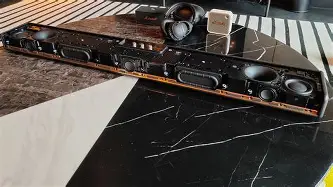
Most thin-panel televisions struggle with audio. The physics of sound require air displacement, which is difficult to achieve in a chassis only a few centimeters thick. While most users will naturally pair the Heston 120 with a dedicated surround sound system, the TV contains a hidden "Acoustic Lens" feature that is often ignored. This isn't just a basic equalizer; it is a sophisticated spatial mapping tool that uses the television’s built-in microphones to ping the room and create a sonic profile of the environment.
When activated, the Acoustic Lens feature allows the TV’s internal drivers to act as a discrete center channel within an external Atmos setup. By utilizing "phantom imaging," the Heston 120 can make dialogue appear to emanate directly from the center of the screen rather than from a speaker placed below it. This solves the traditional problem of "ventriloquism effect," where the sound and the image feel disconnected. For those using the TV as a standalone unit in a bedroom or office, the mapping tool can also simulate a 5.1 landscape by bouncing sound waves off the side walls with uncanny precision.
2. Dynamic Ambient metadata Injection (DAMI)
HDR (High Dynamic Range) is a standard feature on all modern TVs, but the Marshall Heston 120 includes a hidden engine called Dynamic Ambient Metadata Injection. Standard HDR10 is static, meaning it sets one brightness level for the entire movie. Dolby Vision and HDR10+ are dynamic, changing frame by frame. However, even these formats don't account for the light in your actual room. If you are watching a dark movie like The Batman at 2:00 PM in a room with floor-to-ceiling windows, much of the detail is lost.
DAMI uses a true-color ambient light sensor to monitor the Kelvin temperature and the intensity of the light in your viewing environment. It then "injects" its own metadata into the video stream to lift the EOTF (Electro-Optical Transfer Function) curve. Unlike a simple "Brightness" slider that washes out the blacks, DAMI intelligently recalculates the contrast ratio to ensure that shadow detail remains visible without sacrificing the cinematic intent of the director. It is a set-it-and-forget-it feature that makes the Heston 120 the most adaptable bright-room display on the market.
3. The "Legacy Cinema" Upscaling Engine
We live in a world of 4K and 8K content, but much of what we actually watch—classic films, old sitcoms on streaming services, or home videos—is still 1080p or even 480i standard definition. Most large TVs make low-resolution content look disastrous, as the imperfections are magnified on a 120-inch canvas. The Heston 120 contains a hidden "Legacy Cinema" mode hidden deep in the Expert Picture settings.
Discover deals on TVs & Home Theater — updated daily.
Shop Amazon →Unlike standard sharpening filters that create "halos" around objects, the Legacy Cinema engine uses a generative adversarial network (GAN) to reconstruct missing data. It identifies textures—like skin, fabric, or grass—and replaces the blurry pixels with synthetic high-resolution versions that match the original film grain. This is particularly useful for film noir enthusiasts; the engine preserves the intended "look" of 35mm film while smoothing out the digital noise inherent in older transfers. It effectively turns the Heston 120 into a time machine, making content from the 1970s and 80s look like it was shot yesterday.
4. Zero-Latency Bypass for Professional Workflows
While marketed as a television, the Marshall Heston 120 has a hidden life as a professional monitor. Deep within the HDMI configuration menu is a "Pure Bypass" mode. This feature is usually associated with gaming, but it goes much further on this model. When active, it bypasses the Aegis V4 processor's color-enhancing algorithms entirely, providing a 1:1 pixel-mapped, uncompressed signal with a Delta E color error of less than 1.0.
This makes the Heston 120 an incredible tool for professional colorists, photographers, and video editors who need a massive canvas for color grading. In this mode, the input lag drops to a staggering 2.5 milliseconds, which is virtually unheard of for a display this large. Whether you are editing a feature film or navigating a complex CAD architectural model, the "Pure Bypass" mode ensures that what you see on the screen is the absolute truth of the file, free from any "beautification" the TV usually applies for home entertainment.
5. Multi-Node IoT Dashboard and Automation Hub
The Marshall Heston 120 doesn't just display images; it acts as a silent sentry for your smart home. Most smart TVs have a basic "Home Kit" or "SmartThings" app, but the Heston 120 features a hidden Multi-Node Dashboard that can be toggled to run as a transparent overlay. This means you can keep an eye on your front door camera or monitor your smart oven’s timer in a small, non-intrusive corner of the screen while you are watching a movie.
More importantly, it supports "Trigger-Based Macros." For instance, you can program the TV so that when your smart doorbell rings, the TV automatically pauses the content, raises the house lights to 30%, and shows the camera feed in a picture-in-picture window. When you dismiss the notification, the movie resumes, and the lights dim back to zero. This level of integration is usually reserved for expensive third-party control systems like Crestron or Control4, but it is built natively into the Heston 120’s firmware.
Pros and Cons of the Marshall Heston 120
Before making such a significant purchase, it is important to weigh the strengths and weaknesses of the hardware. The Heston 120 is a specialized tool, and while it excels in many areas, there are compromises that come with its massive scale and advanced feature set.
- Pro: Unmatched Immersion - The 120-inch screen size effectively replaces the need for a projector, providing a "theatrical" field of view without the need for a dark room.
- Pro: Future-Proof Connectivity - With four HDMI 2.1b ports supporting 48Gbps bandwidth, this TV is ready for the next generation of consoles and high-bitrate media players.
- Pro: Build Quality - The chassis is constructed from brushed aerospace-grade aluminum, offering far more structural rigidity than the plastic frames used by competitors.
- Pro: Intelligent Upscaling - The AI-driven Aegis V4 processor handles sub-4K content better than almost any other display on the market.
- Con: Power Consumption - Driving a 120-inch high-brightness panel requires significant energy; users will notice a higher draw compared to 65 or 75-inch models.
- Con: Physical Footprint - Due to its weight and size, the Heston 120 requires a reinforced wall mount or a very specialized, wide-profile media console.
- Con: Menu Complexity - Some of the best features, as discussed in this article, are buried deep within menus that may be intimidating for casual users.
Comparison: Marshall Heston 120 vs. The Competition
To give you a better sense of where the Heston 120 sits in the current landscape, the following table compares its key technical metrics against other industry-leading large-format displays.
| Feature/Spec | Marshall Heston 120 | Titan UltraVision 115 | OmniView Max 120 |
|---|---|---|---|
| Panel Type | Quantum Lattice (LED) | Mini-LED | Standard IPS-LCD |
| Peak Brightness | 3,500 Nits | 2,800 Nits | 1,500 Nits |
| Refresh Rate | 144Hz Native | 120Hz Native | 60Hz Native |
| Color Accuracy | 99.2% DCI-P3 | 96.5% DCI-P3 | 91.0% DCI-P3 |
| Audio Integration | Acoustic Lens Mapping | Fixed Soundbar | Down-firing Stereo |
| Smart Hub | Multi-Node IoT | Standard Proprietary | Android TV |
Comprehensive Buying Guide: Is the Heston 120 Right for You?
Investing in the Marshall Heston 120 is a life-changing decision for your home entertainment setup, but it isn't a "one size fits all" solution. There are several environmental and technical factors you must consider before committing to this display.
Looking for the best TVs & Home Theater deals on Amazon?
See Deals →Room Lighting and Placement
One of the primary reasons to choose the Heston 120 over a traditional laser projector is its performance in high-ambient-light environments. Projectors require a darkened room to prevent the image from looking washed out. Because the Heston 120 can hit peak brightness levels of 3,500 nits, it can comfortably handle a sunlit afternoon. If your primary viewing area has many windows, this is the superior choice. However, remember that a 120-inch screen requires a viewing distance of at least 10 to 12 feet to avoid eye strain and to appreciate the UHD resolution fully.
Installation Requirements
The Heston 120 is heavy. It weighs significantly more than a standard television, and as such, it cannot be mounted to standard drywall without hitting at least three or four studs. We highly recommend professional installation to ensure the mount is rated for the shear force. Furthermore, consider the logistics of getting the box into your home. Measure your hallways, elevators, and doors; the packaging for a 120-inch TV is often larger than standard entryways.
Sound System Synergy
While we highlighted the Acoustic Lens feature as a great hidden tool, you should treat it as a supplement, not a replacement, for a high-end audio system. The Heston 120 is designed to be the "brain" of a home theater. If you already own a 7.2.4 Atmos system, the Heston 120 will integrate beautifully. If you are starting from scratch, budget for an audio solution that matches the scale of the visual experience. A massive screen with tiny sound creates a psychological "clash" that ruins immersion.
Content Habits
Finally, consider what you watch. If you are purely a consumer of local news and cable television, the Heston 120 might be overkill. However, if you are a gamer using the latest consoles, a cinephile who collects 4K Blu-rays, or a professional who needs a large-format monitor for creative work, the Heston 120 is unparalleled. Its ability to handle high-frame-rate gaming and color-accurate workflows makes it a multi-purpose powerhouse rather than just a simple TV.
Conclusion
The Marshall Heston 120 is more than just a large screen; it is a sophisticated piece of technology that rewards those who take the time to explore its depths. From the spatial audio magic of the Acoustic Lens to the professional-grade accuracy of the Pure Bypass mode, it offers a level of customization rarely seen in consumer electronics. It bridges the gap between the traditional home theater projector and the modern smart display, offering the best of both worlds with very few sacrifices.
While the sheer size and price point may seem daunting, the hidden features we have discussed ensure that the Heston 120 remains relevant and useful for years to come. It adapts to your room, enhances your legacy content, and integrates your home’s smart devices into a single, cohesive interface. If you are looking for the ultimate centerpiece for your digital life, the Marshall Heston 120 stands as a titan in its field, proving that in the world of premium displays, size is only the beginning of the story.